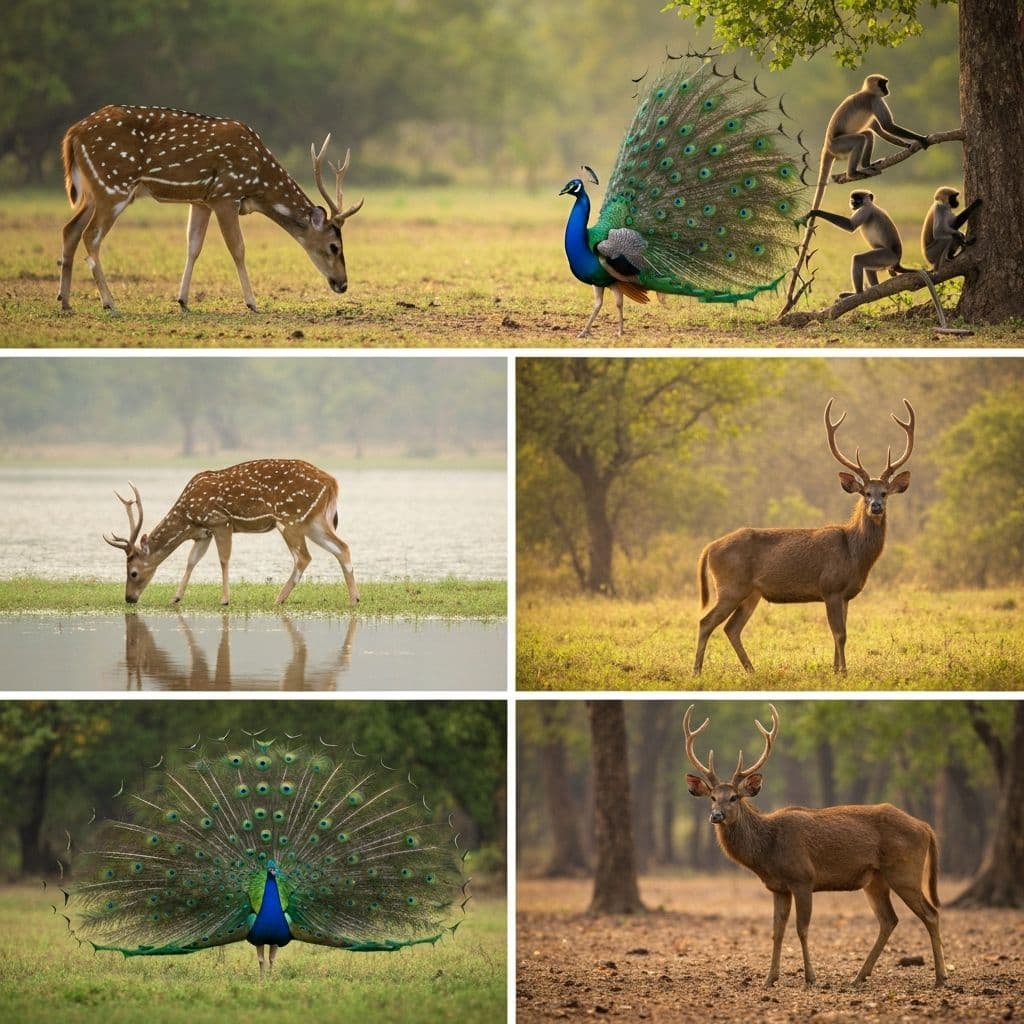
Ranthambore National Park is one of India’s most celebrated wildlife destinations, and for good reason. Spread across the dry deciduous forests of eastern Rajasthan, the park is home to a remarkable range of species — from the Bengal tiger that made it famous, to leopards, sloth bears, marsh crocodiles, and over 300 species of birds. Set against the dramatic backdrop of the 10th-century Ranthambore Fort, few reserves in India offer such a rich mix of wildlife and landscape in one place.
This guide walks through the wildlife of Ranthambore National Park in detail — which animals you can realistically expect to see, where they are most commonly spotted, and how to plan your safari around the species that interest you most.
Is Ranthambore National Park Famous for a Particular Animal?
Yes — Ranthambore National Park is most famous for the Royal Bengal Tiger. It is one of the best places in India, and arguably the world, to see wild tigers in a natural setting during the daytime, thanks to a relatively high tiger density and terrain that offers good visibility compared to denser forests elsewhere in India. The park’s tiger population has grown steadily over the past two decades under focused conservation efforts, making sightings considerably more consistent than at many other reserves.
The Bengal Tiger: Ranthambore’s Star Attraction
Tiger Population and Conservation
Ranthambore is home to over 80 tigers as of recent forest department estimates, spread across the park’s core and buffer zones. The reserve has become one of India’s most important tiger breeding grounds, with several tigresses raising multiple litters of cubs successfully over the years. Some of the park’s tigers and tigresses, such as the late Machli and her descendants including Arrowhead, have become globally recognized individuals followed by wildlife photographers and documentary crews.
Where and When Tigers Are Most Often Seen
Tiger sightings are most frequent in the park’s core zones, particularly Zone 3 (Rajbagh and Padam Lake), Zone 4 (Lahpur and Kachida Valley), and Zone 6 (Kundal), where established territorial tigers are known to reside. Sightings tend to increase in the hotter months of April to June, when tigers visit waterholes more frequently to cool off, and in the early morning safari slot when tigers are most active before the heat sets in.
For a detailed, zone-by-zone breakdown of tiger sighting probability, see our Ranthambore safari zones guide, which covers terrain, historical sighting data, and which zones suit different priorities.
Leopards in Ranthambore
While tigers get most of the attention, Ranthambore also has a healthy leopard population, particularly in the buffer zones such as Zone 7 and Zone 8, where rocky outcrops and scrub forest provide ideal leopard habitat. Leopards are more elusive and largely nocturnal, so sightings are less frequent than tigers, but buffer zone safaris occasionally offer excellent leopard encounters, especially in the early morning or late evening light.
Sloth Bears, Deer, and Other Mammals
- Sloth bears — occasionally spotted in the buffer zones, particularly around rocky, scrub-forest terrain
- Sambar deer — the largest deer species in India and a primary prey species for Ranthambore’s tigers, frequently seen near lakes
- Chital (spotted deer) — commonly seen throughout the park in large herds, especially near grassy clearings
- Nilgai (blue bull) — India’s largest antelope, regularly spotted across most zones
- Indian wild boar — often seen foraging near forest trails and waterholes
- Langurs and rhesus macaques — commonly seen throughout the park, often the first to alert guides to tiger movement through alarm calls
- Marsh crocodiles (muggers) — frequently basking along the banks of Padam Talao and Rajbagh Talao
- Indian jackals and striped hyenas — occasionally spotted, more often at dawn or dusk
Birdlife of Ranthambore National Park
Ranthambore is home to over 300 recorded bird species, making it a genuinely excellent destination for birdwatchers, not just tiger enthusiasts. The park’s lakes — Padam Talao, Rajbagh Talao, and Malik Talao — attract a wide variety of resident and migratory waterbirds throughout the year.
- Painted storks and open-billed storks, commonly seen wading in the lakes
- Indian darters and cormorants, often spotted drying their wings on tree branches near water
- Crested serpent eagles and changeable hawk-eagles, frequently seen perched or soaring above the forest canopy
- Kingfishers, including the common kingfisher and white-throated kingfisher
- Peafowl (India’s national bird), commonly seen and heard throughout the park
- Migratory species such as bar-headed geese, visible in the cooler winter months
Winter months (November to February) generally offer the best birdwatching opportunities in Ranthambore, as migratory species join the park’s resident bird population.
Wildlife Sighting Comparison by Season
What to Expect by Season in Ranthambore National Park
| Season | Months | Tiger Sightings | Best For |
|---|---|---|---|
| Winter | November – February | Moderate | Birdwatching, pleasant weather, scenic photography |
| Summer | April – June | High | Tiger sightings near waterholes, dramatic landscapes |
| Monsoon (Park Closed) | July – September | Park Closed | Not applicable — core zones closed for monsoon |
| Post-Monsoon | October | Moderate to High | Lush greenery, park reopening, good all-round sightings |
For a full month-by-month breakdown of weather, park timings, and sighting trends, see our best time to visit Ranthambore guide.
How to Maximize Your Chances of Wildlife Sightings
- Choose a core zone (Zone 1 to 6) if tiger sightings are your top priority
- Book the early morning safari slot, when animals are most active before the day heats up
- Stay quiet and alert during the safari — alarm calls from deer and langurs often signal a tiger or leopard nearby
- Visit during summer months (April to June) for the highest tiger sighting probability, or winter for the best birdwatching
- Choose a jeep safari if wildlife photography is a priority, since it offers a lower vantage point and greater flexibility to reposition
Not sure which vehicle suits your priorities? Our jeep safari vs canter safari comparison guide breaks down the differences in detail, including how each vehicle affects your wildlife viewing experience.
Plan Your Ranthambore Wildlife Safari
Whether you are hoping to spot a tiger, photograph a leopard, or simply enjoy Ranthambore’s rich birdlife, choosing the right zone, season, and safari vehicle makes a real difference to your experience. Visit our Ranthambore safari booking homepage to explore jeep and canter safari options, check seasonal availability, and start planning your wildlife safari.
To see the wildlife described above in person, look into Ranthambore wildlife safari booking and choose the zone and season that match what you want to spot.
Continue Reading — Related Ranthambore Guides
Frequently Asked Questions
What animal is Ranthambore National Park most famous for?
Ranthambore National Park is most famous for the Royal Bengal Tiger. It is considered one of the best places in India to see wild tigers in a natural setting, thanks to a relatively high tiger density and open terrain that offers good visibility.
How many tigers are there in Ranthambore National Park?
Ranthambore is home to over 80 tigers as of recent forest department estimates, making it one of India’s most significant tiger reserves and an important breeding ground for the species.
Can you see leopards in Ranthambore?
Yes, Ranthambore has a healthy leopard population, particularly in buffer zones such as Zone 7 and Zone 8. Leopards are more elusive and nocturnal than tigers, so sightings are less frequent but do occur, especially in early morning or evening light.
What birds can you see in Ranthambore National Park?
Ranthambore is home to over 300 recorded bird species, including painted storks, crested serpent eagles, kingfishers, Indian darters, and migratory waterbirds during winter. The park’s lakes attract a particularly wide variety of birdlife.
What other animals besides tigers live in Ranthambore?
Besides tigers, Ranthambore is home to leopards, sloth bears, sambar deer, chital, nilgai, wild boar, marsh crocodiles, langurs, striped hyenas, and jackals, along with over 300 species of birds.
Which season is best for wildlife sightings in Ranthambore?
Summer months (April to June) generally offer the highest tiger sighting probability, as animals visit waterholes more frequently. Winter (November to February) is better for birdwatching, thanks to migratory species joining the resident population.
Which safari zones are best for spotting wildlife in Ranthambore?
Core zones such as Zone 3, Zone 4, and Zone 6 have the highest historical tiger sighting rates, while buffer zones like Zone 7 and Zone 8 are known for leopard sightings. Zone allocation depends on advance booking and forest department availability.
Is Ranthambore good for birdwatching, not just tiger sightings?
Yes. With over 300 recorded bird species and several lakes attracting resident and migratory waterbirds, Ranthambore is a genuinely strong birdwatching destination in addition to being a premier tiger reserve.