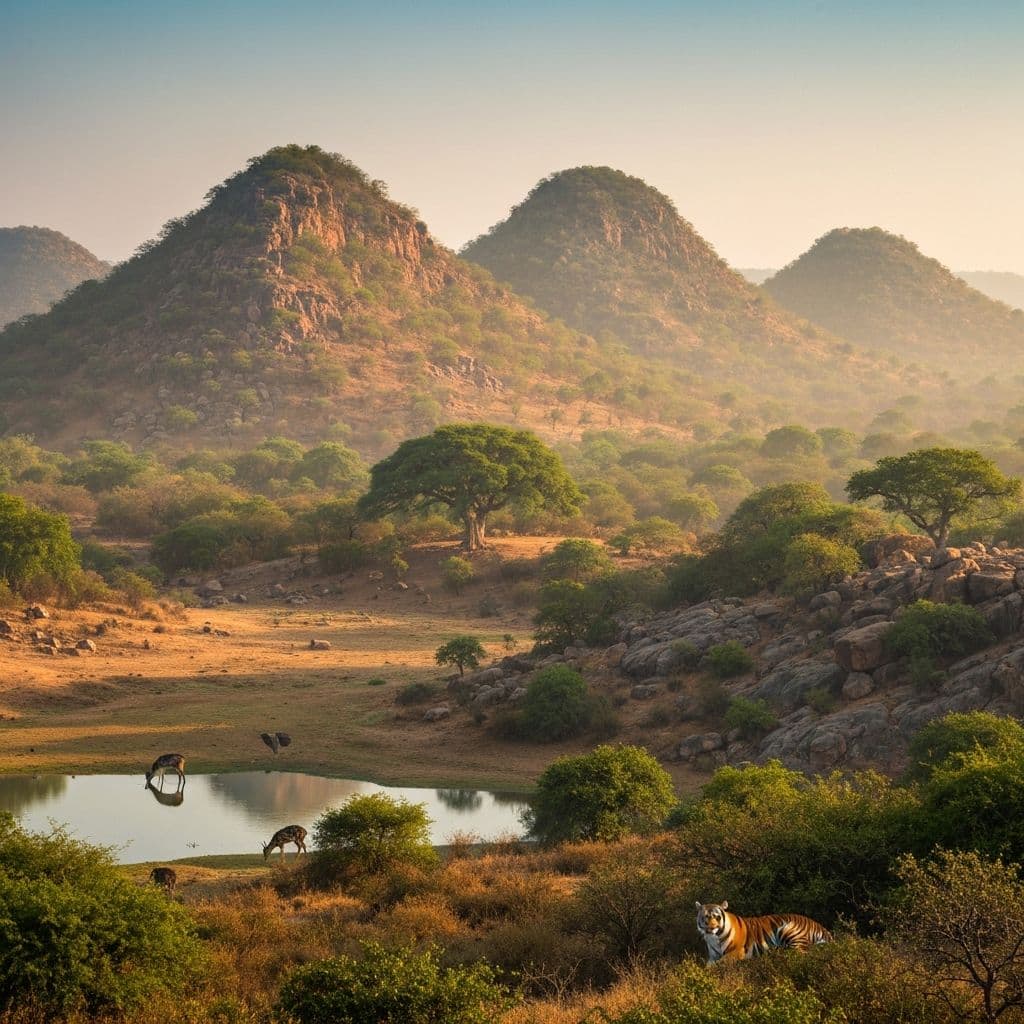
About Ranthambore National Park
India's premier tiger reserve and one of the best places to see the Royal Bengal Tiger in its natural habitat
Welcome to Ranthambore
Ranthambore National Park, located in the Sawai Madhopur district of Rajasthan, India, is one of the largest and most renowned national parks in Northern India. Spread across an area of approximately 1,334 square kilometers, this magnificent wildlife sanctuary is famous worldwide for its tiger population and is considered one of the best places in India to see these majestic creatures in their natural habitat.
The park derives its name from the historic Ranthambore Fort, which stands atop a hill within the park boundaries. This 10th-century fort, now a UNESCO World Heritage Site, adds a unique historical dimension to the wildlife experience, making Ranthambore a destination where history meets nature.
Meet Your Local Ranthambore Expert
Ranthambore Wildlife is run by Rizwan Ali, a Ranthambore safari specialist based right here in Sawai Madhopur, Rajasthan — the town that sits at the doorstep of Ranthambore National Park. Rizwan has been booking and coordinating jeep and canter safaris for travelers since 2018.
Because he lives and works locally, Rizwan has first-hand familiarity with the park's zones, seasonal patterns, and safari options — not from a desk in another city. This on-ground experience is what allows him to recommend the right zone, the right safari type, and the right time of day for every traveler's specific goals, whether that's a first tiger sighting or the perfect photography shot.
Every booking made through this site is handled directly by Rizwan. If you have questions about zones, timings, or what to expect on your safari, you're speaking to someone who knows Ranthambore because he lives next to it.
Please note: Ranthambore Wildlife is an independent, private safari booking service. We are not affiliated with, and do not claim to be, the Rajasthan Forest Department or any official government booking portal. All safari permits are issued by the Forest Department; we simply help you book and plan your visit smoothly.
Wildlife of Ranthambore
Discover the diverse flora and fauna that call Ranthambore home
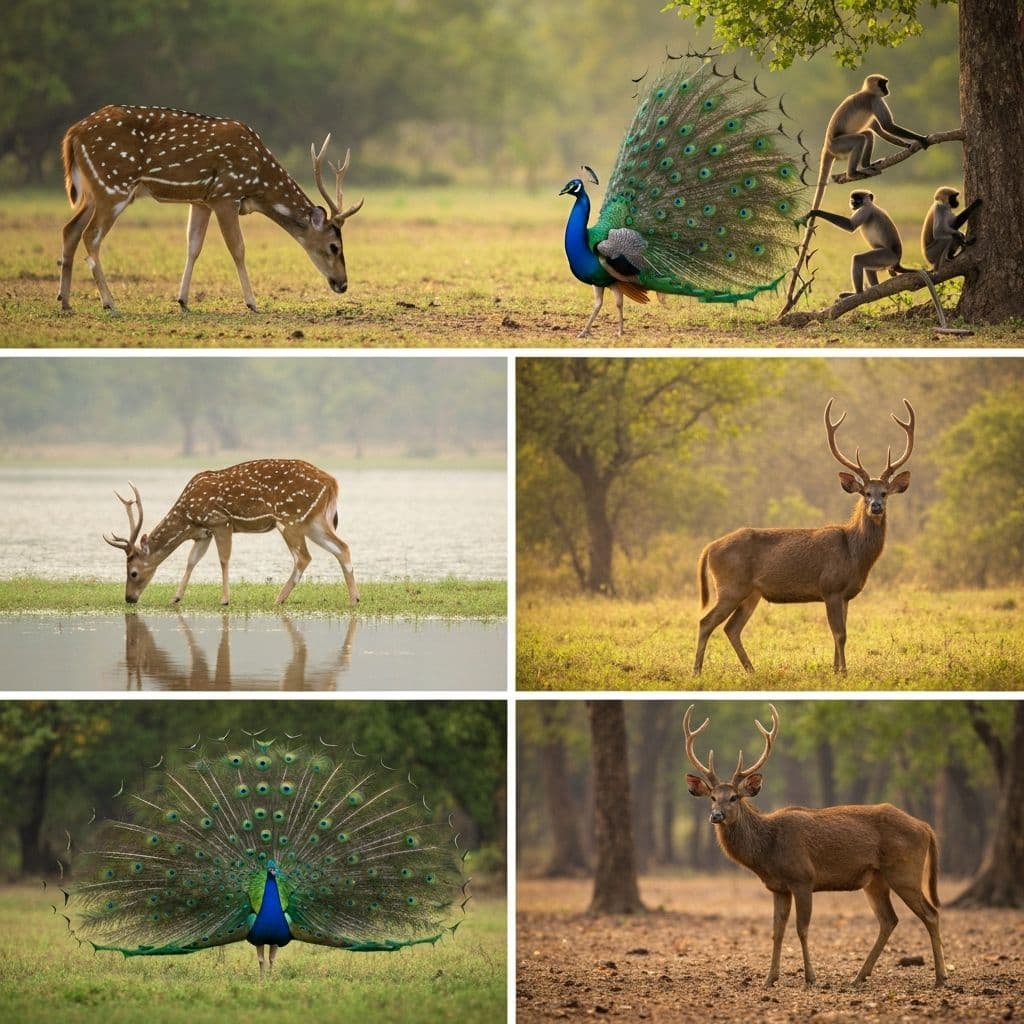
Royal Bengal Tiger
Ranthambore is home to over 70 tigers, making it one of the best places in India for tiger sightings. The tigers here are relatively habituated to vehicles, offering excellent photography opportunities.
Other Mammals
The park also hosts leopards, sloth bears, striped hyenas, sambar deer, chital (spotted deer), nilgai (blue bull), wild boar, langur monkeys, and marsh crocodiles in the park lakes.
Bird Life
Over 300 species of birds have been recorded, including the Indian grey hornbill, crested serpent eagle, painted stork, and the Indian peafowl (peacock), the national bird of India.
Key Features of Ranthambore
Strategic Location
Located 180 km from Jaipur and well-connected by road and rail. The nearest airport is Jaipur International Airport.
Diverse Ecosystem
Features dry deciduous forests, open grasslands, and three lakes - Padam Talao, Raj Bagh Talao, and Malik Talao.
Photography Paradise
Tigers are often spotted near water bodies and in open areas, making it ideal for wildlife photography.
Tiger Conservation
Part of Project Tiger since 1973, the park has seen tremendous success in tiger conservation efforts.
Rich Biodiversity
Home to over 300 bird species, 40 mammal species, and numerous reptile and amphibian species.
Historic Fort
The 10th-century Ranthambore Fort within the park is a UNESCO World Heritage Site and adds historical significance.
Learn more about jeep and canter safaris, best zones, and how to plan your visit on our Ranthambore safari booking homepage.
Visit Ranthambore Wildlife to see how our local team helps travellers plan jeep and canter safaris in the national park.