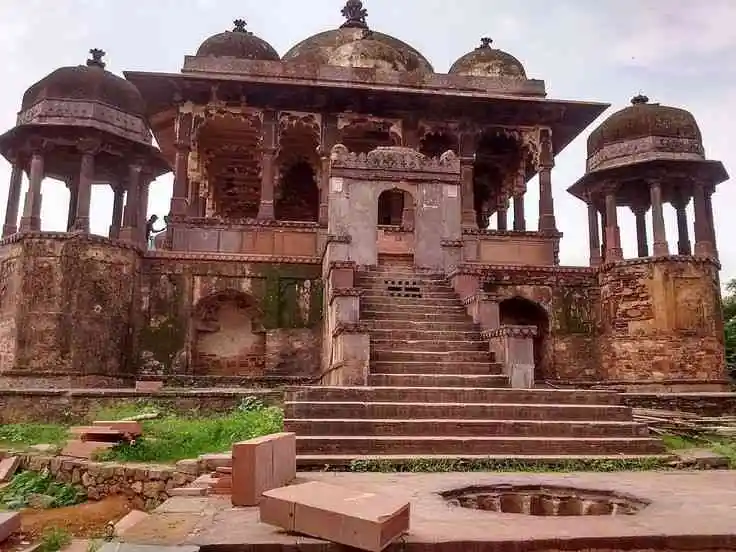
Perched on a hill overlooking Ranthambore National Park, Ranthambore Fort is one of the most striking landmarks in Rajasthan — and one that many visitors are surprised to learn they can visit independently of a tiger safari. This guide covers the fort’s history, the famous temple inside it, visiting hours, and an important 2025 rule about how you can actually reach the fort.
Quick summary: Ranthambore Fort dates back to the 10th century and is part of the UNESCO World Heritage-listed Hill Forts of Rajasthan. Entry is completely free for both Indian and foreign visitors. However, since May 2025, only Sawai Madhopur-registered (RJ25) vehicles are permitted to drive up to the fort — all other visitors must switch to a local taxi.
History of Ranthambore Fort
Ranthambore Fort is believed to have been built in the 10th century by the Chauhan Rajputs, making it one of the oldest forts in Rajasthan. Over the centuries, it changed hands between several ruling powers, including the Delhi Sultanate and the Mughals, before eventually coming under the control of the Kachwaha rulers of Jaipur. Its strategic hilltop position, surrounded by dense forest on all sides, made it a formidable stronghold that was rarely taken by direct assault.
The fort takes its name from a combination of two hills — Ran and Thambhore — and today lends its name to the entire national park and tiger reserve that surrounds it.
UNESCO World Heritage Status
In 2013, Ranthambore Fort was inscribed as part of the UNESCO World Heritage Site "Hill Forts of Rajasthan," a group of six forts recognized for their exceptional universal value, alongside Chittorgarh, Kumbhalgarh, Amber, Jaisalmer, and Gagron. This recognition reflects the fort’s architectural and historical significance, not just as a Ranthambore landmark, but as part of Rajasthan’s broader Rajput military heritage.
The Trinetra Ganesh Temple
Within the fort walls stands the Trinetra Ganesh Temple, one of the most visited pilgrimage sites in the region and believed to be among the oldest Ganesh temples in India. The temple is unique for its depiction of Lord Ganesh with his entire family, and is especially famous for a distinctive local tradition: families across India send wedding invitation cards addressed directly to the temple, inviting Ganesh Ji to bless the occasion. On any given day, thousands of such cards can be seen displayed inside the temple.
The temple draws steady footfall throughout the year, and particularly heavy crowds during Ganesh Chaturthi, making it worth checking local festival dates if you prefer a quieter visit.
Fort Architecture and What to See
- Massive stone ramparts and battlements stretching across the hilltop, offering sweeping views of the forest and lakes below
- Several historic gates (pols) marking the old entry points into the fort complex, including Ganesh Pol near the temple
- The Trinetra Ganesh Temple, along with smaller shrines dedicated to other deities within the fort grounds
- Remnants of old palace structures and stepwells that once supported the fort’s residents during long sieges
- Panoramic viewpoints overlooking Padam Talao and the surrounding safari zones — a good spot to appreciate the scale of the park below
Ranthambore Fort Entry Fee: It’s Completely Free
Unlike most heritage monuments in India, Ranthambore Fort has no entry fee at all. It is completely free to visit for both Indian and foreign tourists. This is separate from the Ranthambore safari price, which does involve a permit fee — for a full breakdown of safari costs, see our
This is a different matter entirely from the Ranthambore safari price, which does involve a permit fee. For a full breakdown of safari costs, see our ticket and permit price guide. Visiting the fort itself, however, costs nothing.
Important: Vehicle Rules for Reaching the Fort (Updated 2025)
This is one of the most important things to know before planning your visit, and it catches many travelers off guard: since May 2025, private vehicles from outside Sawai Madhopur are no longer allowed to drive up to Ranthambore Fort or the Trinetra Ganesh Temple. Only vehicles registered with the local RJ25 code (Sawai Madhopur) are permitted on the road leading up to the fort.
This rule was introduced by the forest department after a tragic incident in April 2025, when a child was attacked by a tiger near the temple road. Given how frequently tigers move through this stretch of forest, the restriction on outside vehicles was brought in specifically to reduce foot and vehicle traffic risk in that corridor.
In practice, this means that if you arrive in your own car, a hired outstation vehicle, or a private taxi registered outside Sawai Madhopur, you will need to park near the Sherpur Trijunction and continue to the fort in a local RJ25 taxi. This rule applies specifically to the fort and temple road — it does not affect jeep or canter safari vehicles inside the national park, which operate under a separate system.
Practical tip: the simplest way to handle this is to arrange your fort taxi through the same local travel agent or safari operator you are booking your safari with. Since they are based in Sawai Madhopur, they can arrange an RJ25 taxi directly, and can also arrange a local guide for the fort if you would like a full guided tour with detailed history — this is usually arranged as a separate, small add-on request.
Can You Visit the Fort Without Booking a Safari?
Yes. Visiting Ranthambore Fort does not require a safari permit or booking of any kind, and as covered above, it is free to enter. This makes it a popular option for travelers with limited time, those visiting Ranthambore primarily for its history and temple, or families looking for a lower-cost activity alongside their safari days — keeping in mind the RJ25 vehicle rule when planning how you will get there.
Best Time to Visit Ranthambore Fort
Early morning and late afternoon generally offer the most comfortable temperatures and the best light for photography, especially during the warmer months (April to June). Winter mornings (November to February) can be quite cool at this elevation, so carrying a light jacket is advisable. Since the fort involves a fair amount of walking on uneven stone surfaces, comfortable footwear is recommended year-round.
Combining a Fort Visit With Your Safari Trip
Most visitors combine a Ranthambore Fort visit with their safari days, since the fort sits within the same park boundary. If you are still planning your safari zones and timings, see our Ranthambore safari zones guide and our things to do in Ranthambore guide for a broader view of how to structure your trip.
Plan Your Ranthambore Visit
Whether your priority is history, wildlife, or both, Ranthambore rewards a well-planned visit. Head over to our Ranthambore safari booking homepage to check safari availability and start planning your trip alongside a visit to the fort.
Continue Reading — Related Ranthambore Guides
Frequently Asked Questions
How old is Ranthambore Fort?
Ranthambore Fort is believed to date back to the 10th century, built by the Chauhan Rajputs, making it one of the oldest forts in Rajasthan.
Is Ranthambore Fort a UNESCO World Heritage Site?
Yes. Ranthambore Fort was inscribed as part of the UNESCO World Heritage Site "Hill Forts of Rajasthan" in 2013, alongside five other forts including Chittorgarh and Amber.
What is the entry fee for Ranthambore Fort?
Ranthambore Fort has no entry fee — it is completely free to visit for both Indian and foreign tourists. This is separate from the Ranthambore safari price, which does involve a permit fee.
Can I drive my own car up to Ranthambore Fort?
Only if your vehicle is registered under the local RJ25 (Sawai Madhopur) code. Since May 2025, all other private vehicles are required to park near the Sherpur Trijunction and continue to the fort by local taxi. This rule was introduced after a tiger-related safety incident near the temple road in April 2025.
Why are outside vehicles banned from Ranthambore Fort road?
The Rajasthan forest department introduced this rule in May 2025 following a tiger attack near the Trinetra Ganesh Temple road in April 2025. Given frequent tiger movement in that corridor, only local RJ25-registered vehicles are now allowed, to reduce traffic and improve visitor safety.
Can I visit Ranthambore Fort without booking a safari?
Yes. The fort is free to enter and does not require a safari permit. You will, however, need to arrange a local RJ25 taxi if you are arriving in an outside vehicle, due to the current vehicle restriction.
What is the Trinetra Ganesh Temple inside Ranthambore Fort?
The Trinetra Ganesh Temple is one of the oldest and most visited Ganesh temples in India, located within Ranthambore Fort. It is well known for the local tradition of families sending wedding invitation cards addressed to the temple.
What are the visiting hours for Ranthambore Fort?
The fort is typically open from early morning until early evening, seven days a week. Timings can vary slightly by season, so checking current hours locally before visiting is recommended.